A rehearsal dinner is a full meal, so dessert should be small. One to one and a half pieces per guest is enough, served plated or set out on a short table, and finished before the toasts get long. People have eaten. Most of them are getting up early tomorrow. The plate is a taste, not a course.
That is the short answer. The longer one depends on where the dinner is and what the wedding is doing the next day.
What the evening actually is
The rehearsal dinner is the smallest and most personal meal of the weekend. Family, the wedding party, a few people who flew in. There are toasts, sometimes a lot of them, and somebody always tells the story the couple wishes they would not.
Dessert sits in the middle of that. It arrives as the toasts start or just after, and it should not compete with them. Nothing that needs explaining, nothing that needs a knife, nothing so sweet that it lands heavy after a dinner and a glass of wine.
The numbers come from how much dessert per guest, where “after a full dinner” is the lowest line on the chart for a reason.
Plated, or a small table
For a seated dinner, plated is the natural fit. Each guest gets one composed dessert at the same moment, and the room goes quiet for a minute, which is a good minute to start a toast. I work with your caterer or the venue kitchen on the dessert course. Plated entremets are the usual answer, and a small dessert flight, two or three bites on one plate, works well too. If entremet is a new word, here is what it means.
For a dinner where people are already up and moving, a short table works better. A tray of tartelettes, madeleines, something individual like a tiramisu. Guests take one on the way back from the bar and keep talking.
There is a longer comparison of the formats, including the croquembouche, in croquembouche, dessert table or plated. For a rehearsal dinner the tower is usually too much. It belongs to the wedding.
Where it is decides what is possible
This matters more than the menu.
At a home or a private venue, I come to you. Everything is baked the day before, brought over in our own van, and plated or laid out on-site. That is how every private event works: the dessert comes to your party. Nothing is served at my kitchen.
At a restaurant, check first. Ask the restaurant whether it allows outside dessert, whether it charges to plate or serve it, and whether its kitchen has room and refrigeration for a delivery that afternoon. Some say yes without fuss. Some do not allow it at all. Better to know before anything is designed.
At a club, the club kitchen and I work alongside each other. Tell me the club and the room, and I will coordinate with their event staff directly.
Keep it different from tomorrow
If the wedding has a dessert table, the rehearsal dinner should not preview it. Different pieces, a different format, a different mood. The rehearsal is plated and quiet; the wedding is the spread.
A few combinations that work after a full dinner:
- The lemon tart, because it is sharp. After a rich meal, something with acid wakes the table up rather than finishing it off. Why its meringue holds is a separate story.
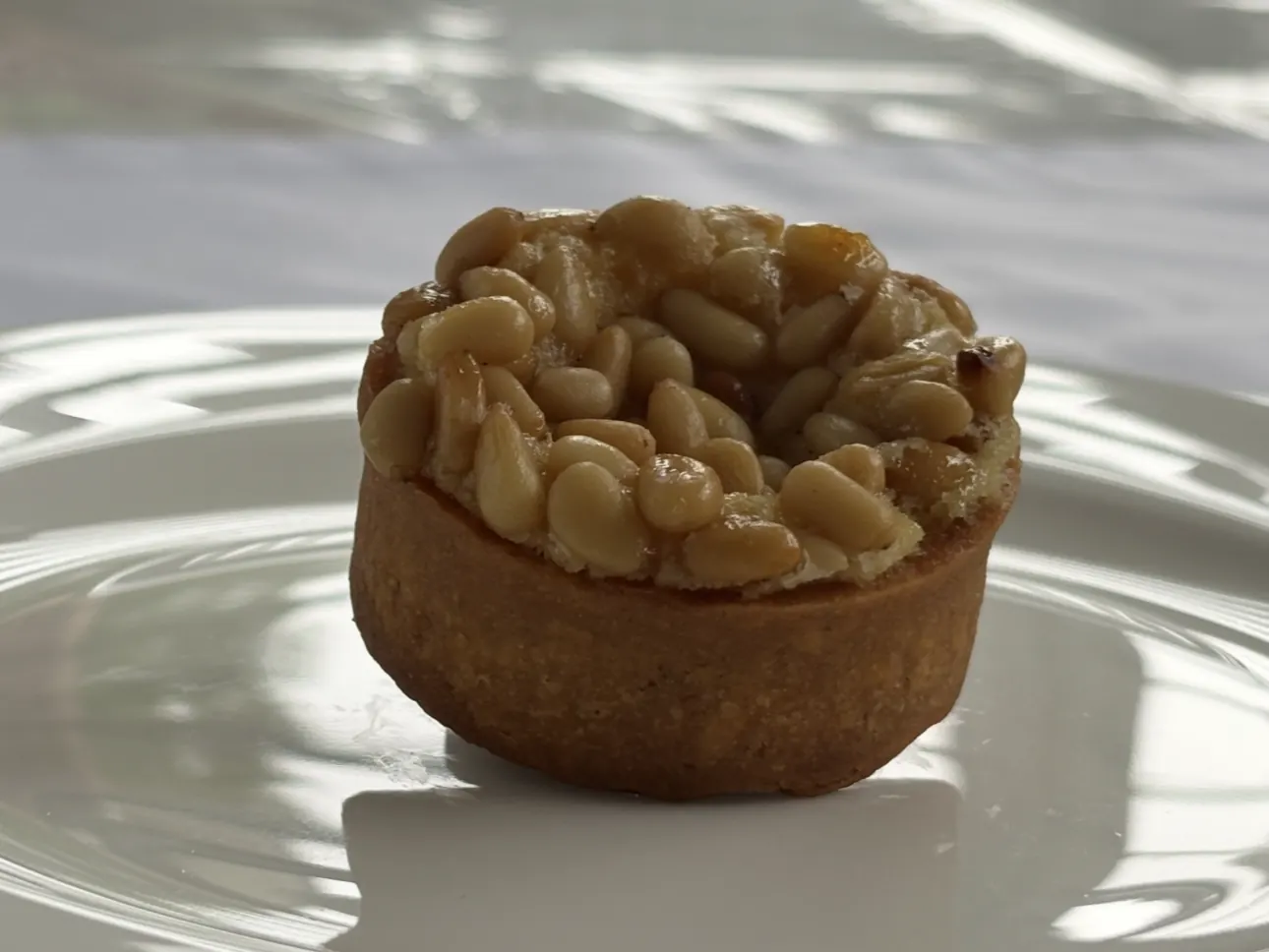
- The pine nut tart, small and nutty, the kind of thing people eat in three bites without putting down their glass.
- A Fraisier for the couple’s table, if there is a moment to cut something. Light, built on strawberries, and less sweet than it looks.
Allergies, and the two-day problem
The rehearsal guest list overlaps heavily with the wedding’s, so the allergy list you build for one serves both. Most of what I bake contains wheat and dairy, and often tree nuts. Gluten-free and nut-free pieces are possible by request with enough notice, but they come out of the same kitchen. A severe allergy needs to be on the application, not mentioned on the night.
The two-day problem is timing. A rehearsal dinner and a wedding are back to back, and both need baking the day before. If you want dessert for both, put both dates on the same application so they are planned as one job. Asking for them separately, a month apart, is how one of them ends up not fitting.
When to book
I take four to five private events a month, and the calendar is built five to nine months out. If the wedding is already booked with me, add the rehearsal as early as you know the venue. If it is not, the booking timeline explains what to lock in first.
What to send me
The date, the time dinner starts, and roughly when the toasts will begin. The venue, and whether it is a home, a club or a restaurant. The guest count. Whether dinner is seated. Anyone with an allergy. Whether I am also doing the wedding.
Apply for the date, and if the wedding itself is still being planned, the wedding page shows what goes on the table the next day.