There are three classical formats for dessert at a serious French event, and which one you pick says more about your event than almost any other catering decision. Each format has a personality. Each has a budget. Each has a photographer’s-eye-view that’s either flattering or unflattering.
This piece is the comparison that planners and venue F&B directors usually have to assemble themselves out of forum posts and Instagram tags. Here it is in one place.
The croquembouche — the spectacle
The croquembouche is a tower of caramel-glued cream puffs, traditionally built fresh on the morning of the event. The classical version is over four feet tall, decorated with spun sugar, and is wheeled out as the dessert centerpiece — meant to be cracked open with a small cleaver in front of the guests.
What it signals: wedding traditional, French to its core, dramatic. It’s the format pictured in every Pâtisserie Stohrer print. Done well, it photographs better than any cake. Done badly, it sags. There is no middle ground.
What it costs: at the level we’d build it, expect $1,500 to $4,500 for the croquembouche itself, plus the dessert it replaces. The cost driver isn’t ingredients — it’s the build time. A four-foot tower with proper spun-sugar canopy is a four-hour assembly that has to happen on-site, after the venue lighting is up and before the first guest arrives. Add in the chef’s day-rate for that window.
The constraints you should know: it does not survive Houston August humidity for more than about three hours. The caramel softens, the sugar canopy collapses, and the entire piece needs to be eaten within that window or it goes from spectacle to mess. Indoor venues with reliable air conditioning are the only safe bet between June and September here. Spring and fall weddings — especially indoor receptions at venues like The Houstonian or Carlton Woods Creekside — are the natural fit.
Photographer’s note: the croquembouche only photographs well when lit from above and slightly behind. It is a vertical piece, and most wedding photographers will frame it as the hero of the room only if the venue’s lighting cooperates. Worth confirming with your photographer in advance.
The dessert table — the spread
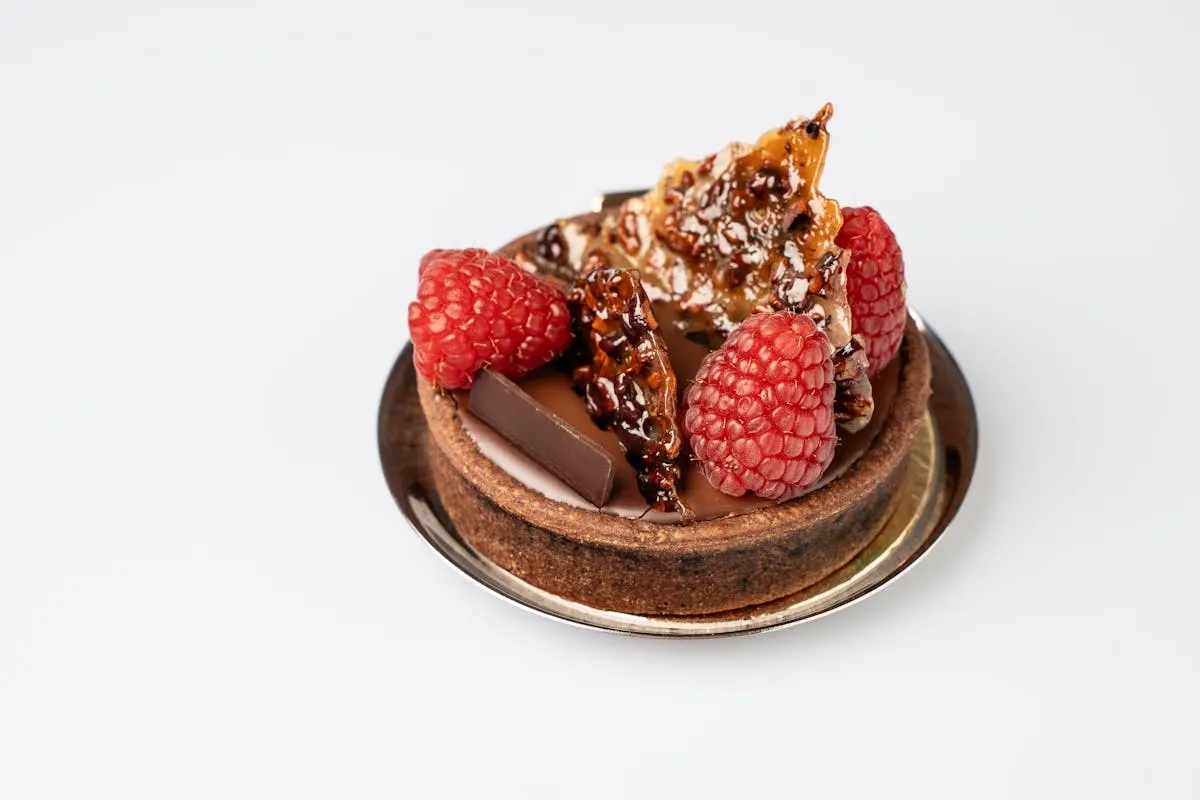
A dessert table is six to twelve different small pieces, presented in quantity on a long table or two, usually styled with linens, height variation, and the bakery’s signature plating. Think madeleines, tartelettes, choux, mini éclairs, fruit-topped financiers, hand-piped petits fours.
What it signals: generous, modern, a little less traditional than a single-tower piece. It’s the format that’s taken over wedding photography for the last decade because it gives the photographer ten different shots — the table itself, individual pieces close-up, guests choosing, the table at the end of the night when everything has been eaten.
What it costs: for a 100-guest wedding, expect $4,000 to $9,000 depending on piece complexity. The cost is roughly linear with headcount because each guest needs about 1.5 to 2 pieces of each variety to avoid the table looking picked-over by the third hour. Below 1.5 pieces per guest, the table looks raided. Above 2.5, you’re paying for waste. The right number is the planner’s call but a serious pâtissier will guide you.
The constraints you should know: dessert tables need a dedicated server during the table’s open window — usually two hours in the middle of the reception. Guests will hover, and someone needs to keep the table looking right (replenishing low items, removing empty trays, wiping the linen). This is sometimes the venue’s job and sometimes the pâtissier’s, and it’s worth pinning down in writing in advance.
Photographer’s note: dessert tables are the easiest of the three formats to photograph well. Almost any angle works. The table styling — linens, signage, height variation, color flow — does most of the work. Ask your pâtissier whether they style the table or you’ll need to bring a separate stylist.
The plated dessert — the discipline
A plated French dessert at a 200-person wedding is the format wedding-industry insiders quietly respect the most. Each plate is built individually, served at temperature, and arrives in front of every guest at the same moment. Done well, it is a Michelin-starred experience inside a wedding reception. Done poorly, it is the format most likely to embarrass everyone.
What it signals: restaurant-grade. Disciplined. Confident. It’s the format of black-tie dinners, foundation galas, and the kind of small wedding where the host has thought hard about every detail. It is the most expensive format per guest, but it photographs as the most refined.
What it costs: $35 to $90 per plate, depending on the complexity of the dessert and whether the pâtissier is plating on-site or shipping pre-plated. For 100 guests that’s $3,500 to $9,000. Surprisingly comparable to a dessert table — but with very different operations behind it.
The constraints you should know: plated dessert is the format most likely to go wrong if the kitchen logistics aren’t right. Each plate needs to leave the kitchen at the right temperature (some elements at 4°C, others at room) and arrive at the table within four to seven minutes. This requires either an on-site finishing station with the pâtissier and at least one assistant, or a partnership with the venue’s kitchen that’s been negotiated weeks in advance. Walk through this with your pâtissier and your venue F&B manager together — never separately. The handoff is where things break.
Photographer’s note: plated desserts are the easiest format for the photographer once they’re served, but only one or two photos will tell the whole story (overhead of one plate plus a wide shot of the dining room mid-service). The photographer needs to be ready in the four-to-seven-minute service window. Most wedding photographers expect this; ask anyway.
How to pick
Use this rough decision tree:
- Indoor venue with reliable AC, fewer than 150 guests, traditional French aesthetic → croquembouche.
- Any venue, 60 to 300+ guests, modern or traditional, Instagram-heavy guest list → dessert table.
- Black-tie dinner, foundation gala, country-club wedding, 30 to 200 guests, restaurant-grade expectation → plated.
- Hybrid: dessert table during cocktail hour + plated at reception → the format that high-end Houston weddings have started settling on. Expensive, but covers both photography phases of the event. Real chefs will quote this combination cleanly.
If your pâtissier hesitates when you ask which format suits your event, that’s also informative. A working chef has done all three many times and will recommend the one that fits — not the one that pads the invoice. Ask why they’re recommending what they’re recommending. The reasoning is the answer.