This is the question that comes up in nearly every first conversation, and most of the answers online give you one number for every situation. One number cannot be right for both a two-hour cocktail reception and a wedding where dessert replaces the cake.
Here is how we actually work it out.
Start with the role dessert is playing
Dessert is the finale. Plated or passed after dinner, one clear moment. People eat one serving because that is what they are handed.
Dessert is a table. A spread guests visit at their own pace, often for a couple of hours. This is where the numbers climb, because people take a piece, talk, and come back.
Dessert is the event. A shower, a tea, an afternoon reception, an office celebration with no meal. Dessert is doing the work a meal usually does.
Dessert is a favor. Boxed and taken home. One serving per guest, and the packaging matters more than the count.
Those four scenarios have genuinely different math, so any planning that starts with one universal number is going to be wrong in at least three of them.
Working numbers
These are what we plan against, and they assume a variety of items rather than a single kind.
Passed or plated after a full dinner: one to one and a half pieces per guest. People have eaten. The plate is a taste, not a course.
Dessert table alongside a cake: two to three pieces per guest. The cake absorbs some demand and the table absorbs the rest.
Dessert table with no cake: three to four pieces per guest. This is the most commonly underestimated setup by a wide margin. When the table is the only sweet thing in the room, it carries everything.
Afternoon reception or shower with no meal: four to five pieces per guest, and lean savory for part of it. Quiche, gougères, something with salt in it. An hour into a spread that is entirely sweet, people stop eating and you end up with leftovers of the thing you bought the most of.
Takeaway boxes: count the boxes, not the guests, and add ten percent. Guests who are leaving early take one on the way out and guests who stay take one at the end.
What actually moves the number
Time of day. An evening crowd eats less dessert than an afternoon crowd. Counterintuitive, and consistent.
Length of the reception. Two hours and four hours are not the same event. A table sitting out for four hours gets visited more than twice as often, not twice.
Whether people are seated. Guests who are standing and moving graze considerably more than guests at a table. A cocktail-style reception runs higher per head than a seated dinner with the same guest count.
Who is in the room. A wedding with a lot of kids runs high. A corporate lunch runs low. A bridal shower runs high, reliably.
Variety. Six kinds of small things will be eaten more than two kinds. This is worth knowing because it also means variety costs less than it seems: you are not adding volume, you are redistributing it.
Piece size is doing a lot of hidden work
“One piece” is not a fixed unit, and this is where most quotes stop being comparable.
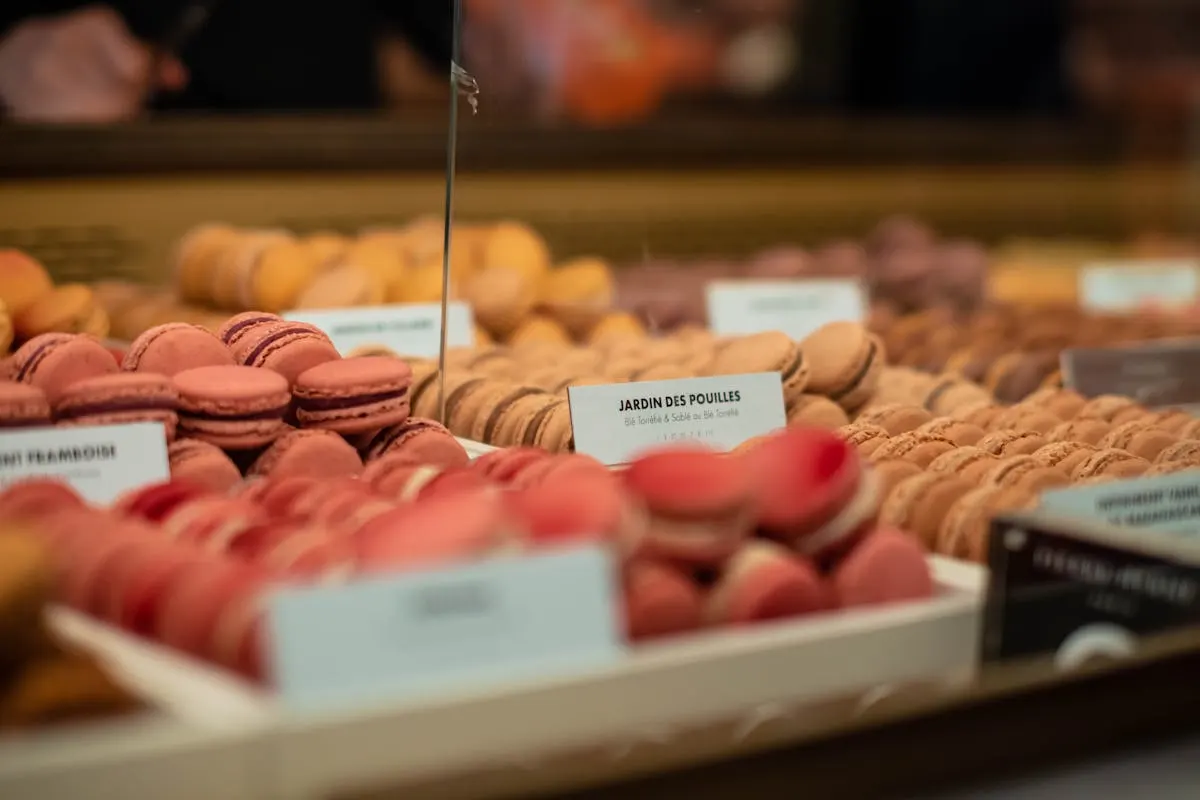
A macaron is two bites. A financier is two or three. A tartlet is four or five. A slice of tarte is a proper dessert on its own. A guest who takes three macarons and a guest who takes three slices of tart have eaten very different amounts.
So when you are comparing what two people quoted you, the count alone tells you very little. Ask what the pieces are.
The mistake worth avoiding
Ordering exactly the number you calculated.
An empty dessert table forty minutes before the end of a reception is the version of this that people remember, and it happens constantly. A table that still looks composed at the end is part of what guests are seeing all night.
We generally suggest ten to fifteen percent over the working number, weighted toward the items that hold well and travel. It is a small amount of money against the one thing everybody photographs.
What we do with your numbers
Tell us the guest count, the time of day, how long the reception runs, whether there is a meal, and whether there is a cake. That is enough to build a real proposal rather than a guess, and we will tell you if we think you are ordering too much.
We have also talked people down. If a table is going to sit for ninety minutes after a full dinner, you do not need what the internet told you.
Get in touch with your date and guest count and we will put a number to it.