Somewhere in the fall the invitations change. All summer it was evening, after the heat broke. Now it is Saturday at ten, or Sunday after church, and the question is what to put on the table for eight people who will arrive hungry and stay until early afternoon.
A French kitchen has an answer for that hour, and it is not croissants. It is quiche, a box of madeleines, and one tart, and none of it needs you at the stove while your guests are in the house.
The savory anchor: the quiche trio
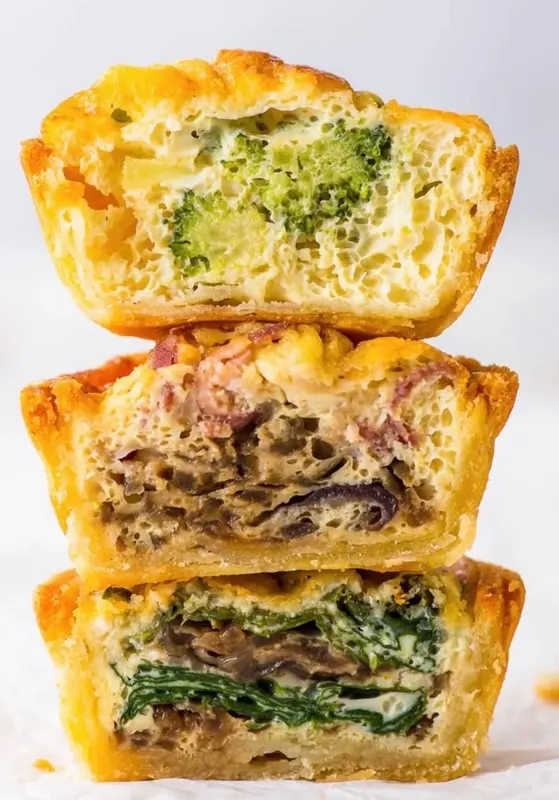
The Quiche Maison comes as a trio of mini quiches, three rotating varieties. The current three are tomato and basil, a four-cheese forestière, and salmon. Each one is a sablé shell with a just-set custard filling, sized so that a guest takes one whole rather than being served a wedge.
That size is the point at a brunch. A whole quiche has to be cut, and the first slice never comes out clean, and by the third slice the host is holding a knife instead of a coffee cup. Mini quiches sit on a board and people help themselves. Two per adult is a comfortable count if there is a tart on the table as well; three if the quiche is the meal.
They are good at room temperature, which is how most people eat them at a morning meeting. For a brunch I would warm them. Put them on a tray in a moderate oven for about ten minutes, until the center is hot, and bring them out as the second wave of guests arrives. Don’t microwave them. The pastry goes soft and the custard weeps, and I wrote out why in the piece on keeping pastry after delivery.
The quiche contains wheat, dairy, and eggs, and the salmon one contains fish. Say so on the board, or ask when you order which of the three to lean on.
The sweet side: madeleines with the coffee
A box of madeleines belongs on the counter next to the coffee pot, open, from the moment the first guest walks in. They are a small cake, baked the morning they go out, at their best within hours, and they are the thing people eat standing up while the quiche warms.
The seven flavors give you a way to shape the table without more dishes. The traditional, with honey and orange zest, goes with coffee. The lime and thyme goes with a mimosa. The salted caramel goes with the people who came for dessert first. A single box of twelve covers six to eight guests at a brunch, because they are eaten one at a time over a couple of hours rather than plated. Two boxes if the guest list is closer to twelve.
Do not refrigerate them and do not open the box the night before. The clock on a madeleine starts at the oven, and the box keeps the crisp edge for the morning if it stays shut until people arrive.
One tart, for the center
A brunch table wants something to look at. This time of year that is the apple rose tart: thin slices of apple laid in a spiral, glazed, baked until the edges catch. It sits in the middle of the table, it photographs, and it eats as well at eleven in the morning as it does after dinner. The pine-nut tart is the quieter alternative, toasted and not very sweet, and it is the better choice if the crowd is more coffee than mimosa.
Take the tart out of the refrigerator about half an hour before guests arrive. Cold, the shell is hard and the filling tastes of less than it should. Cut it into thin slices, because it is sharing a table with quiche and madeleines and nobody needs a wedge.
How much, for how many
For eight adults: one quiche trio per two or three guests, one box of madeleines, one tart. For twelve: double the quiche, two boxes, and either two tarts or one tart and a whole cake if the brunch is celebrating something. For a smaller table of four, a single trio, one box, and skip the tart, or keep the tart and skip the quiche, depending on whether the morning is more breakfast or more dessert.
The per-guest planning piece has the fuller arithmetic. The short version for brunch is that people eat less than at a party but they eat for longer, so a spread that looks modest at ten o’clock is usually gone by one.
When the order has to be in
Everything is baked to order and the cart needs 24 hours, so a Saturday brunch is a Friday order at the latest, and a Sunday brunch is a Saturday order. Earlier is easier. Pick the delivery day and the morning window when you check out, and someone needs to be home to take the box.
Two things to know about the weekend. There is no delivery on Mondays. And Sunday delivery runs until two in the afternoon, so a Sunday order is a morning delivery by definition. If the brunch is at ten, choose the morning window, and when the confirmation email lands with the delivery time, check that it clears your table by a comfortable margin.
If you would rather not have the doorbell go while you are setting the table, have it delivered the afternoon before. The quiche and the tart keep in the refrigerator overnight and are in good shape the next morning. The madeleines are the exception, and for them the morning delivery is worth the interruption. If you want both, order the madeleines separately for the morning of.
How ordering works covers the mechanics, including sending an order to a host’s address rather than your own, which is a good way to arrive at a brunch you are not hosting.
If the table is bigger than a table
A brunch for thirty, a shower, a morning at the club: at that size it stops being a cart order and becomes a conversation. Trays instead of boxes, a count agreed in advance, delivery timed to the venue. Send a note with the date, the address, and roughly how many, and I will tell you what makes sense for that morning.
For eight people at your own kitchen table, the cart is enough. Order Friday, warm the quiche, keep the madeleines shut until the first car pulls in.