Every summer someone describes a beautiful plan to me: long table under the oaks, dessert out from the start of cocktail hour, guests drifting over through the evening. It photographs wonderfully in other climates.
In Houston in August, that table has about twenty minutes before it starts telling on you.
None of this means outdoor events are off the table. It means the menu has to be chosen for the conditions rather than in spite of them, and the timing has to be planned rather than assumed.
What the heat is actually doing
Two separate problems, and people usually only account for the first.
Heat softens fat. Butter begins to give somewhere in the mid-eighties, and once it goes it does not come back the same. A buttercream that slumps and is then chilled will set again, but the texture and the surface will not recover.
Humidity is the quieter one, and here it is the more destructive. Sugar attracts water out of the air. Anything whose structure depends on dry sugar starts to soften, weep, or go tacky in high humidity even when the temperature is manageable. This is why a dessert can hold up fine at an indoor event in a warm room and fail on a mild but muggy evening outside.
What holds up well
Tarts with a baked filling. A frangipane or a baked custard tart is stable. The structure is set, there is no aerated fat holding the shape, and it looks the same at the end of the night as it did at the start.
Madeleines and other baked cakes. Genuinely reliable. No frosting to lose, no filling to break.
Choux with a pastry cream filling, filled close to service. The shell is sturdy, and the filling is far less heat-sensitive than a whipped buttercream.
Anything served from a chilled surface. A dessert that would otherwise struggle becomes fine if it is sitting over ice or on a cooled platter rather than a warm one.
Fruit-forward desserts, which also read better in the heat. Guests reach for something bright at an August event and leave the richest thing on the table.
What struggles
Meringue and anything built on it. Pavlova, meringue kisses, Italian meringue on a tart. These are sugar and air, and humidity is precisely what they cannot tolerate. They go from crisp to chewy to weeping, and it is not slow.
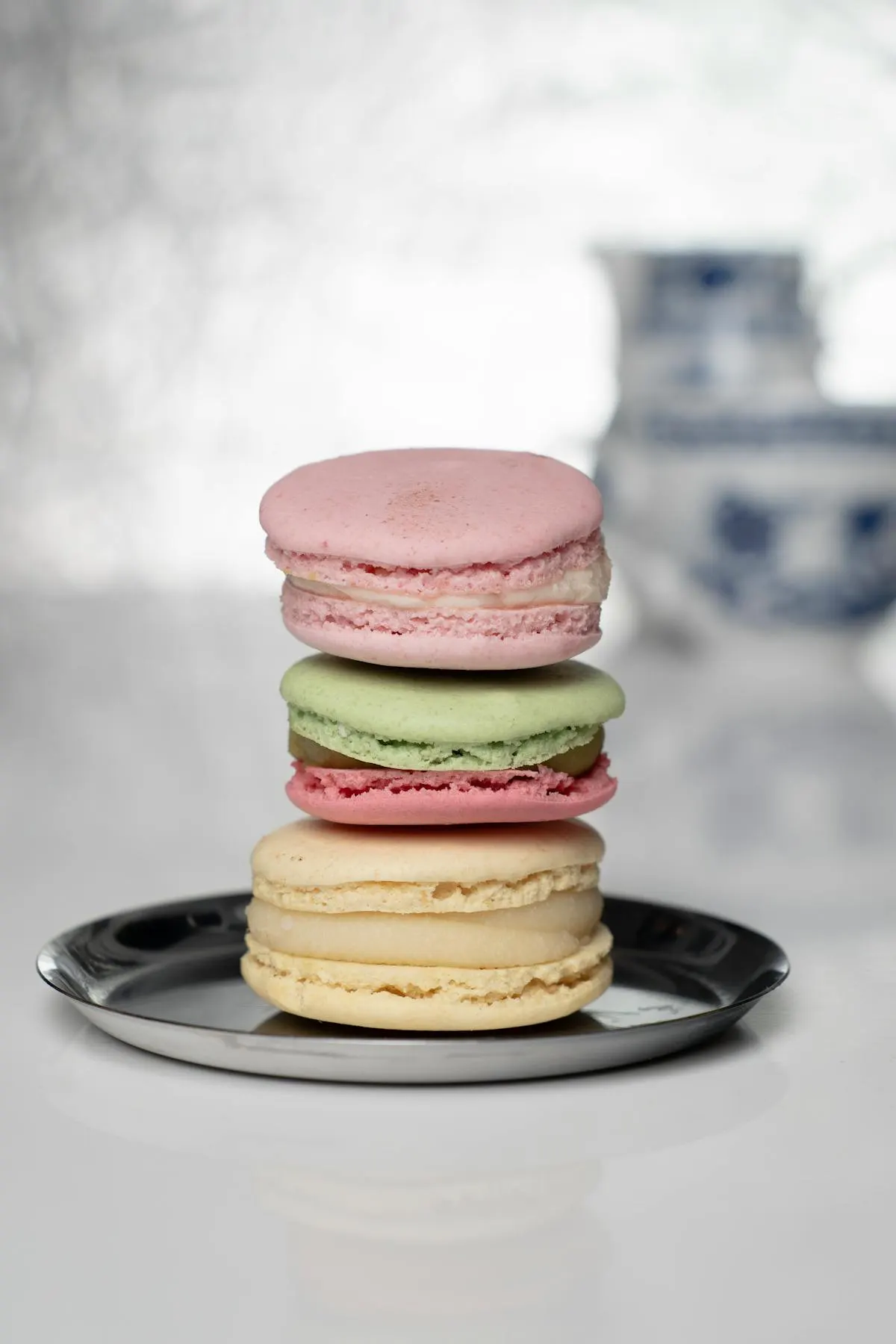
Macarons, outdoors, for a long stretch. The shell softens and the foot loses definition. They are fine for a plated moment or a shorter window, particularly in shade, but they are not a good choice for a table that sits out for three hours.
Whipped cream in any exposed position. It has a short life outside even in good conditions.
Tempered chocolate work, meaning decorative shards, curls, and anything with shine. It blooms and it softens. Chocolate as a component inside something is fine; chocolate as an architectural element outdoors is asking a lot.
Tall tiered cakes in direct sun. The problem is not only the surface. Gravity and softening fat together do things to structure that are difficult to reverse once they start.
Planning that actually works
Put dessert late and keep it short. The single most effective change. Bring the table out shortly before you want people eating from it rather than at the start of the event. An hour of exposure is a very different proposition from four.
Shade is not optional, and neither is a plan for it. Full shade, and think about where the sun will be at the actual hour, not where it is when you visit the venue at noon.
Ask the venue what is genuinely available. Refrigeration close to the table, a shaded staging area, and access to power for fans all change what is possible. A holding space thirty seconds from the table changes the menu more than any other single factor.
Move air. A fan over the area does more for both heat and humidity than people expect.
Plan for photographs early. If the table is being photographed, do it as it is set rather than after the toasts. That is when it looks its best, and it removes the pressure to leave it out longer than it should be.
Have the cake cut on schedule. A cake that sits out waiting for a delayed moment is the most common failure at a summer event, and it is a timeline problem rather than a baking problem.
Indoor events are not automatically safe
A room with the doors propped open all evening, or a venue that turns the air conditioning down after the ceremony, produces similar conditions more slowly. If a space is warm when you tour it in the afternoon, it will be warmer with two hundred guests in it.
What I would build for an August evening outside
A baked fruit tart as the centerpiece. Madeleines, which travel and hold beautifully. Choux filled on site shortly before service. Something citrus and bright. A modest cake for the cutting moment, brought out for it rather than displayed through the evening.
That table looks correct at the end of the night, and nobody spends the reception watching it.
If you are planning something outdoors here, tell me the venue, the month and the hour, and we will build a menu around what the day is actually going to do. Get in touch and we will start there.