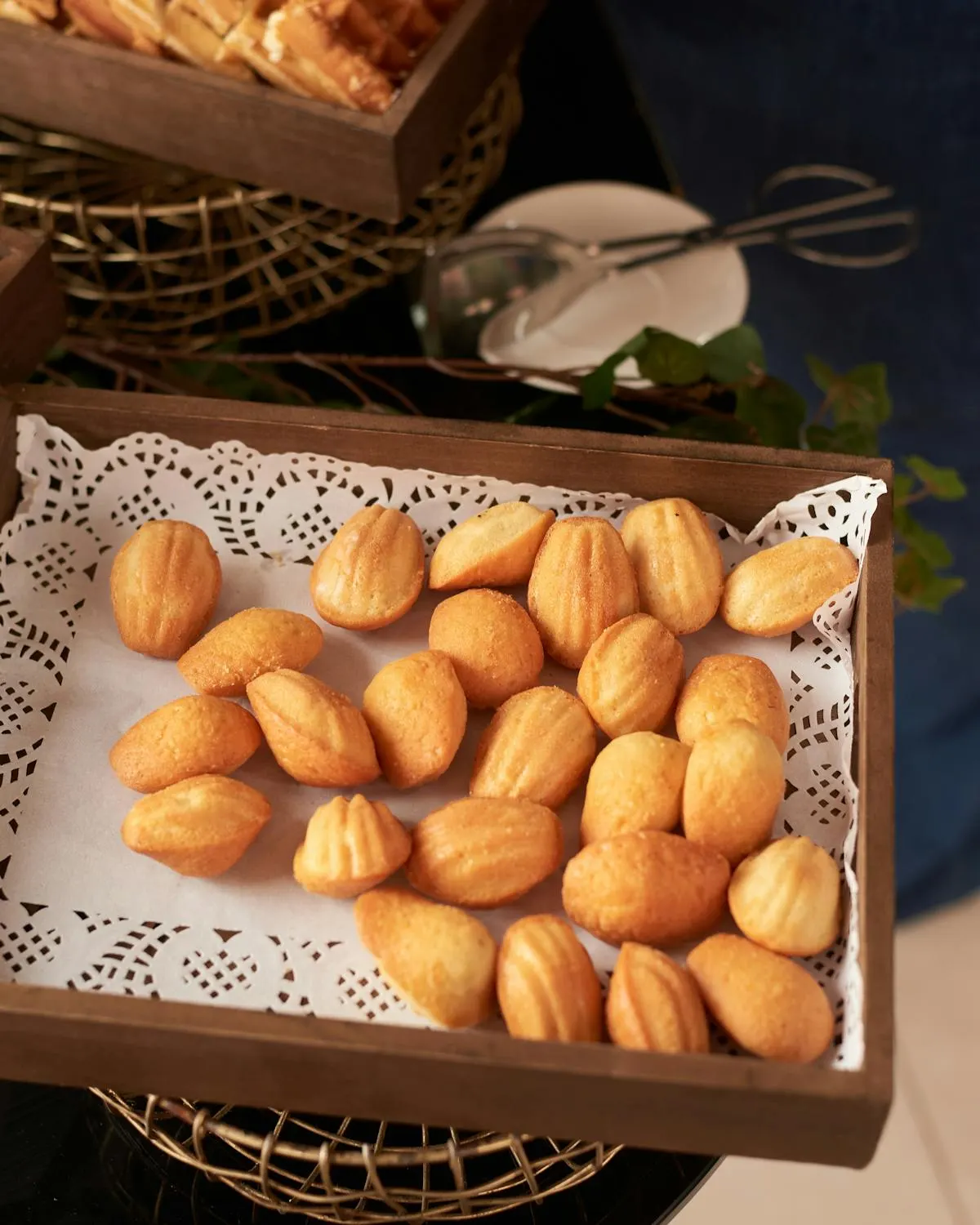
There’s a moment in almost every Houston wedding planner’s career when a couple walks in, opens an inspiration deck full of Paris pastry shop photos (Cédric Grolet windows, Pierre Hermé color stories, the impossible-looking shell-shaped madeleines from a small Montmartre window) and asks: “Can we get this here?”
The honest answer is: yes, but only from a small handful of people. Most of what’s photographed at weddings as “French pastry” is American buttercream cake-decorating with a French name on the box. Real French patisserie is a different craft: different flour, different butter, different fermentation times, different schools. The pool of people who actually trained in it is small.
This post is the one we wish we could send every couple, every planner, and every venue F&B director who’s tried to figure out the difference. It is not about us. It is about how to tell.
What “French-trained” actually means
There are exactly two kinds of training that matter for high-end French patisserie work in the United States:
- A diploma from one of France’s accredited pastry schools: École Ducasse, École Lenôtre, Bellouet Conseil, Le Cordon Bleu Paris, ENSP Yssingeaux. These programs run six to twelve months, are taught in French, and end with a written and practical examination by working pâtissiers. The diploma is recognized by the French Ministry of Education and by every Michelin-starred kitchen in the country.
- A working apprenticeship in a Paris kitchen: preferably more than one. Two years inside Gilles Marchal’s windows in Montmartre, a season at Cédric Grolet’s tournament prep table at Le Meurice, time in the pastry brigade at the Trianon Palace under Eddie Benghanem. None of these end with a piece of paper. All of them end with the pâtissier learning the difference between a 4°C butter block that bends and a 6°C block that breaks.
The first path is verifiable. Ask for the diploma. Real ones are issued by the school, in French, with the school’s seal and the date of the practical exam. The second is harder to verify, and that’s why the people who have it tend to talk about specific chefs and specific kitchens rather than vague “Paris experience.” A real apprentice will name the chef, the address, and the years. Someone who’s bluffing will say “Paris” and change the subject.
There’s a third tier: Meilleur Ouvrier de France (MOF). This is a national recognition awarded by the President of the Republic to the best craftsmen in their specialty, after a multi-year competition. There are perhaps fifty living MOFs in pastry. Most of them teach. If your prospective pastry chef trained directly under an MOF, was awarded their diploma by an MOF, that is a credential worth verifying with a Google search and a photograph.
What to look at, not just listen to
Credentials are necessary but not sufficient. Look at the work.
The shell. The classic French madeleine has a particular shape: an elongated oval with shallow ridges on the back and a defined, golden hump on the front. That hump is a tell. It comes from a cold-rested batter and a hot oven, and it’s the first thing a pâtissier learns to chase and the last thing they ever feel finished with. If a chef’s “madeleines” are round, deeply ridged, or muffin-domed, you are looking at a well-meaning amateur with a different mold.
The pâte sablée. Cut a tarte aux framboises in half. The sablé crust should be the color of a wheat field at sunset and should snap under a pastry fork without crumbling. A pale, mealy, fork-mashable crust means the butter wasn’t worked correctly into the dough. A fundamental error.
The cream. Pastry cream (crème pâtissière) at room temperature should hold a fork upright for a full second before slowly releasing it. Too thin: undercooked. Too stiff: flour-bound rather than egg-bound, and you’ll taste it.
If you can’t visit and look in person, ask for cross-section photographs. Real pâtissiers love being asked. They’ve spent their lives chasing exactly these details.
The questions worth asking on a tasting
A tasting is a job interview. The pâtissier is interviewing you, too. Bring questions that show you understand the craft.
- “Where did you train, and who signed your diploma?” Lets them tell you about their school AND their teachers in one breath. Real ones will brighten up.
- “What do you do six months ahead for a wedding our size?” Tests planning competence. You’re listening for: tasting, menu draft, ingredient sourcing windows, equipment loadout, and the kitchen’s other booked dates that month.
- “What can’t you do, or what won’t you do?” Anyone who claims they can do everything is bluffing. A real pâtissier will name specific things: buttercream-only flavor profiles, fondant cake decoration, anything sold from a bain-marie under heat lamps. The “won’t do” list is the most informative answer of the day.
- “Can we visit a working day?” A real kitchen will say yes (with a date that suits their bake schedule). A non-kitchen (a vanity bakery operating out of a commissary) will hedge.
What to expect on the price
The pastry budget on a Houston wedding tends to land between 8 and 14 percent of the total event spend. A $60,000 wedding has a $4,800 to $8,400 pastry budget. A $200,000 wedding has $16,000 to $28,000. Below 8 percent, you are buying grocery-store quality with a French name on the invoice. Above 14 percent, you are usually paying for a celebrity chef’s travel and brand premium rather than a meaningful upgrade in the dessert itself.
Real Paris-trained chefs often charge a non-refundable consultation deposit before booking, typically $500 to $1,500, credited against the eventual proposal. This is normal. It’s a serious-buyer filter and reflects the time spent on planning a custom menu. Be wary of any chef at this level who doesn’t ask for one. It usually means they don’t have enough demand to filter.
The shortlist test
If you can answer all of the following with a confident yes, you have a real French pâtissier:
- Their training is verifiable: a school name, a diploma date, a chef’s name on the certificate.
- They can name the specific Paris kitchens they’ve worked in, with addresses and years.
- Their madeleines have the elongated-oval shell shape and a defined dome.
- Their pâte sablée snaps cleanly without crumbling, and the color is right.
- Their consultation process includes a written proposal and a real tasting, not a phone call and a quote.
- They charge a consultation deposit and aren’t squeamish about it.
If three or fewer of those are yes, keep looking. The Houston market has expanded considerably in the last few years, and there are real Paris-trained chefs working here now, including in Northwest Houston. Find one. The dessert table is the photograph that ends up on every guest’s phone.